When we first said out loud that we wanted to take our three kids across the country in an RV for over a year… it felt exciting—but also completely overwhelming.
Where do you even start?
We didn’t have a perfect system. We just started with a simple idea:
Let’s figure out where we want to go… and build from there.
Step 1: Start With the Big Picture.
We began with a list of all 49 states we wanted to visit (sorry, Hawaii—you’re getting your own trip someday).
From there, we created two running lists:
National parks
“Must-see” places we already knew about
At this stage, it wasn’t about logistics—it was about dreaming a little.
Step 2: Let Curiosity Lead (Hello, Pinterest)
Once we had our base list, we went deeper.
For each state, we searched:
“Bucket list things to do in [state]”
This opened the floodgates.
We started finding:
Hidden gems
Kid-friendly stops
Unique restaurants
Museums and historical sites
Natural wonders we had never even heard of
Instead of overthinking it, we just kept adding to our list.
Step 3: Map Everything (This Changed Everything)
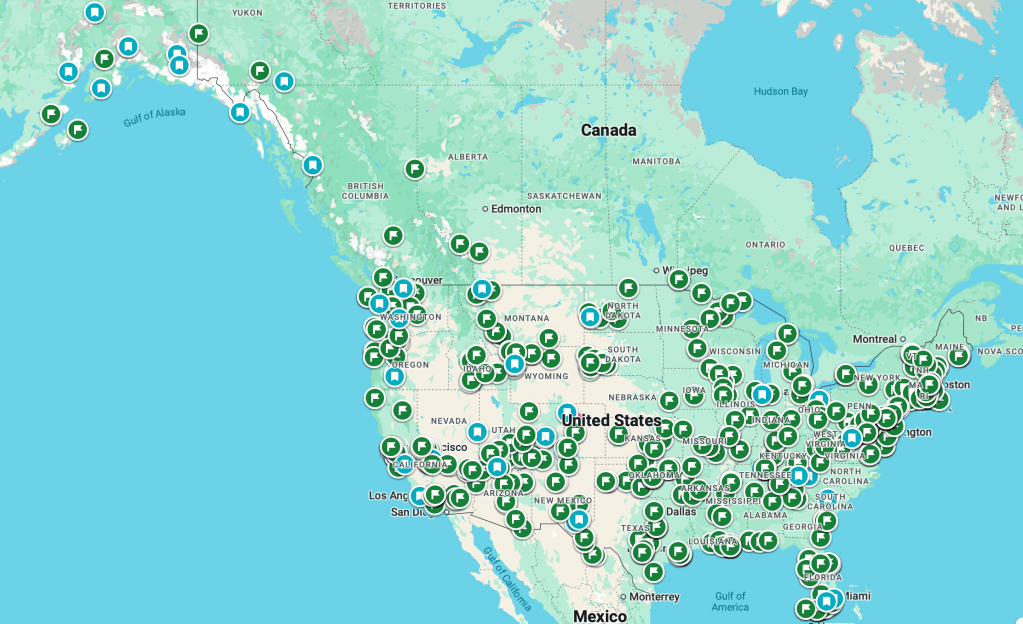
Screenshot
This was the turning point.
We took every place that caught our interest and pinned it into Google Maps:
National parks
Restaurants
Scenic stops
Campgrounds
Attractions
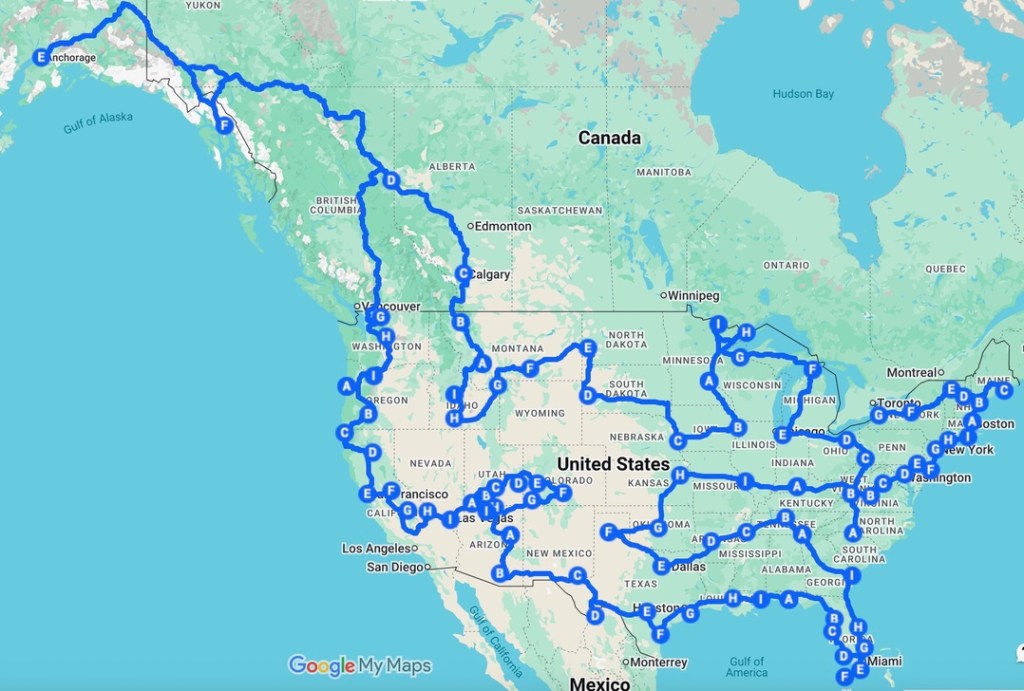
And suddenly… something really cool happened. The route started to build itself.
We could literally see the most efficient way to travel just by looking at where everything was clustered.
Step 4: Follow the Weather
We knew early on: we didn’t want to freeze… or melt.
So we planned our route around:
Staying close to 70-degree weather
Hitting major parks at their best time of year
For example:
Avoiding extreme summer heat in the desert
Timing northern states for warmer months
Catching parks when they’re fully open and accessible
Avoiding Tornado Alley at its prime time
This step required some adjusting—but it made a huge difference in shaping our timeline.
Step 5: Decide How Long to Stay
Once we had a general route, we asked: how long do we actually want to stay in each place?
We based this on:
Number of things to do
Travel fatigue (especially with kids)
Time to explore vs. just “check the box”
Some stops are quick. Some are worth slowing down for. We tried to build a rhythm that felt sustainable—not rushed.
We are also REALISTS and know that we are going to march by the beat of our own drum–this plan is merely guidelines!
Step 6: Plan Where We’ll Stay
For each stop, we researched and noted:
Private Campgrounds
State or National Parks
KOAs
Harvest Hosts locations
We prioritized:
Family-friendly spots
Proximity to what we wanted to see (no more than a 2 hour drive to sites in the Jeep)
Good reviews (which is EXTREMELY important!)
This part alone could be its own full-time job—but having it mapped out ahead of time gives us so much peace of mind. This became very important in planning our drive through Canada to Alaska, as there are not as many options to help break up the travel times.
Step 7: Build the Master Spreadsheet
Once everything started coming together, we organized it into a spreadsheet.
Each stop includes:
Location
Number of days
Where we’re staying
What we plan to do
Top restaurants or local food we need to try
Distance to the next stop
Estimated travel time
Then we broke it down even further: Monthly tabs to help us see the trip in manageable chunks. This turned a massive, year-long trip into something we could actually wrap our heads around.
Step 8: Build a Real Budget
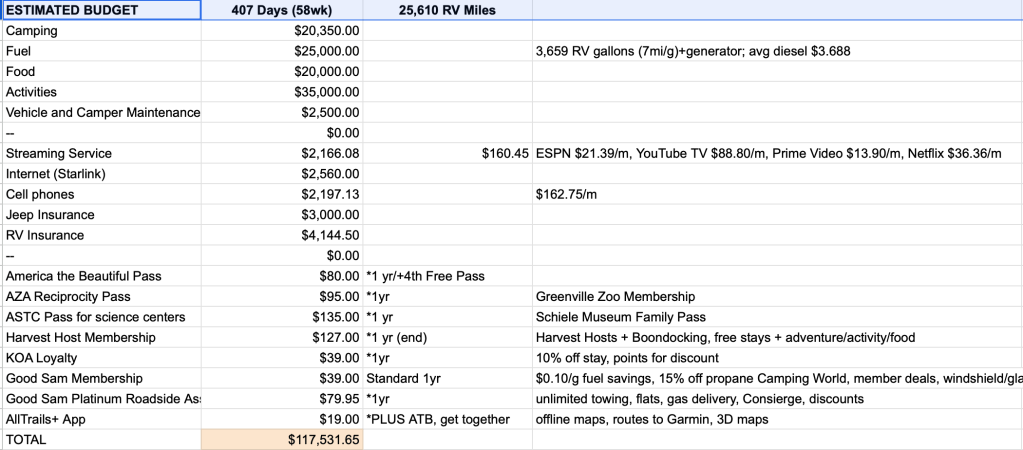
After mapping the route, we wanted to understand: what will this actually cost?
Here’s how we approached it:
1) Fuel
We totaled our mileage and calculated diesel costs using the national average.
2) Food
We used our current grocery/dining spending and added about a 15% buffer.
Because let’s be honest…
More eating out
More snacks on the go
More “let’s try this place!” moments
3) Other Costs
We also factored in:
Campground costs (using our semi-pre-planned choices ranging from $35/night to $100/night, Harvest Hosts factoring in the spending at the host site, etc)
Desired Activities (museums, zoos, excursions)
Memberships (we’ll break these down in another post)
Vehicle + RV maintenance
>Our Estimated Total<
For 14 months on the road as a family of five:
$117,500
That number might surprise some people—but for us, it represents:
A year of experiences over things
Education outside of a classroom
Time together we can’t get back
Also, look at it like thisthat’s under $8500/month for the trip of a lifetime. Disney costed us that much in a week!
What We’ll Track Along the Way
This plan is just the beginning. As we travel, we’ll be sharing:
Our real, updated spending
Where we saved money
What was worth it (and what wasn’t)
How memberships helped offset costs
Final Thoughts
Planning this trip wasn’t about getting everything perfect. It was about:
Following curiosity
Creating a flexible plan
And building something that works for our family
Because at the end of the day…
Home isn’t the RV. It’s wherever we are together.And we can’t wait to Goforth.
If you’re planning your own trip or dreaming about one, we’d love to hear: 👉 What’s the first place on your list?



Leave a comment